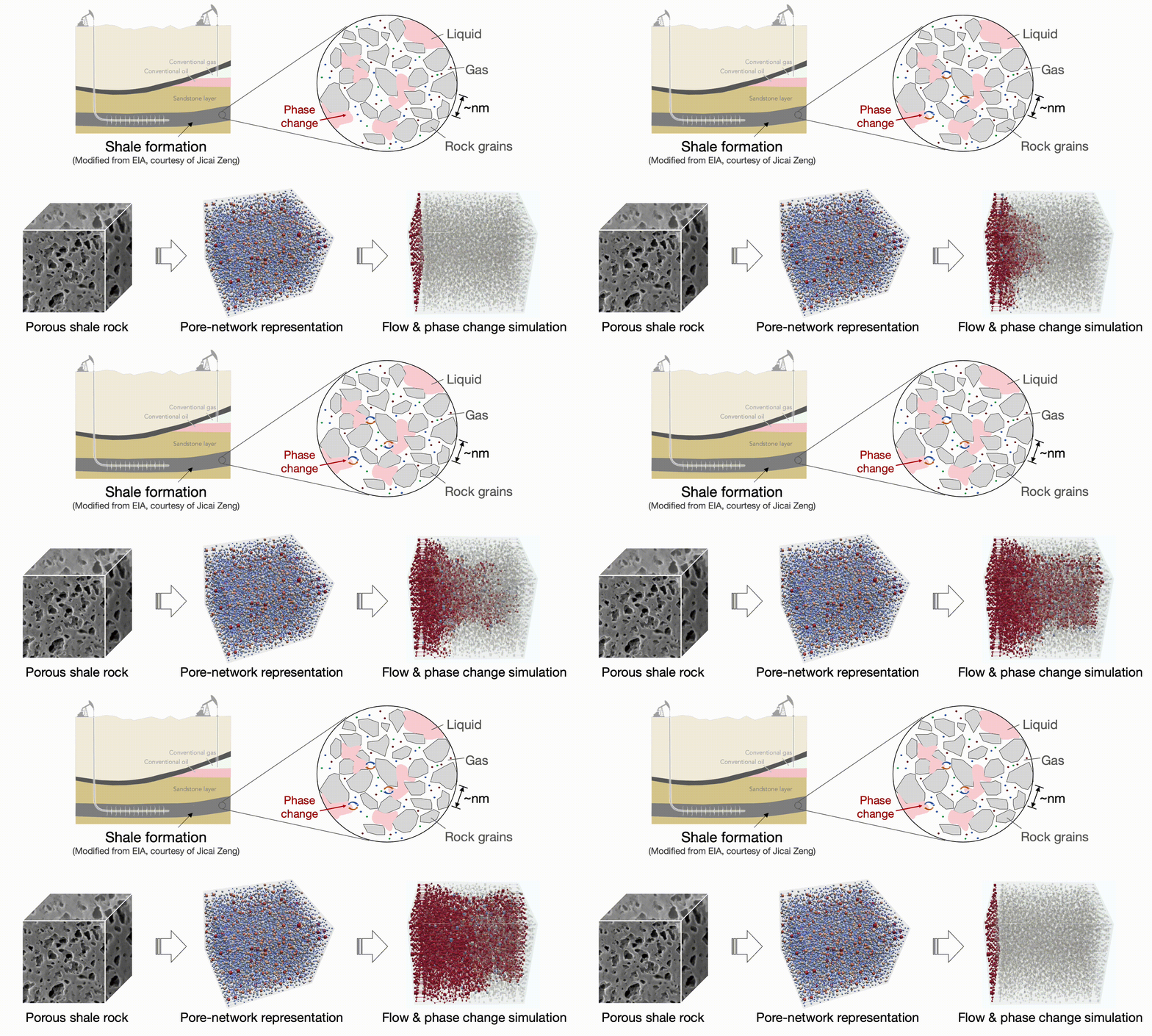
Reactive Transport in Aqueous Batteries
This project investigates charge-discharge mechanisms in aqueous batteries using mathematical modeling and experimental comparisons. The modeling framework accounts for multiple chemical and electrochemical reactions, including nucleation, deposition, dissolution, gas evolution, and intercalation, as well as reaction-induced changes in electrolyte pH and reactive surface area.
The work provides a mechanistic tool for studying diverse aqueous battery chemistries and supports the design of low-cost, high-utilization batteries for grid-scale energy storage.
Relevant material: Chen et al., JES (2026) [PDF].
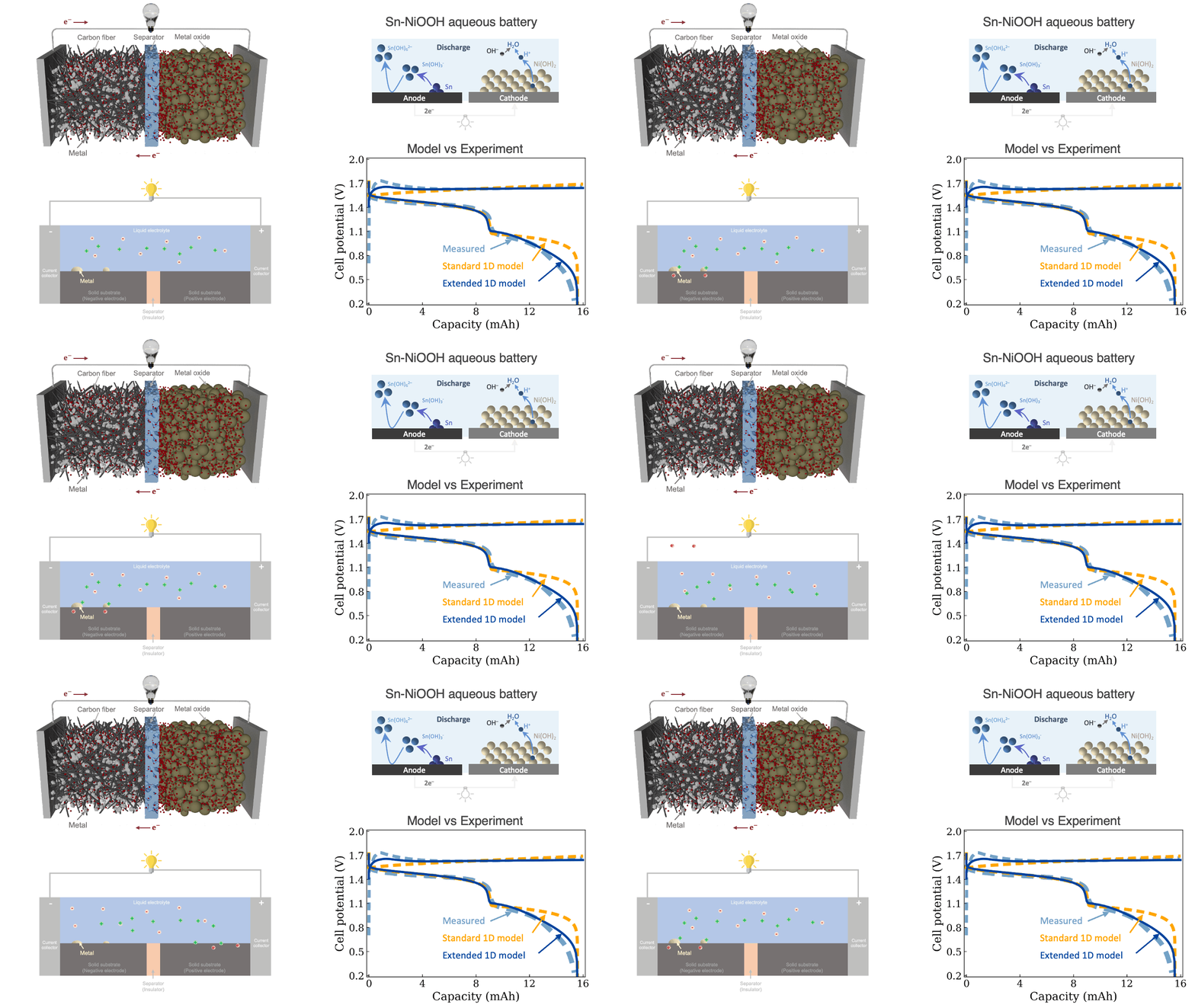
PFAS Transport in Partially Water-Saturated Soils
Per- and polyfluoroalkyl substances (PFAS) are interfacially active emerging contaminants that pose risks to subsurface drinking water resources. Quantifying their transport is challenging because PFAS can accumulate at air-water interfaces in partially water-saturated soils and partition across different interfacial environments, including grain-associated interfaces and thin water films.
This work develops mechanistic pore-scale models and analytical upscaling frameworks that capture transport mechanisms unique to PFAS. The goal is to bridge pore-scale physics and field-scale modeling concepts for improved characterization and remediation planning.
Relevant materials: Chen & Guo, WRR (2023) [PDF]; Chen & Guo, AWR (2025) [PDF]; Chen et al., AWR (2026) [PDF].
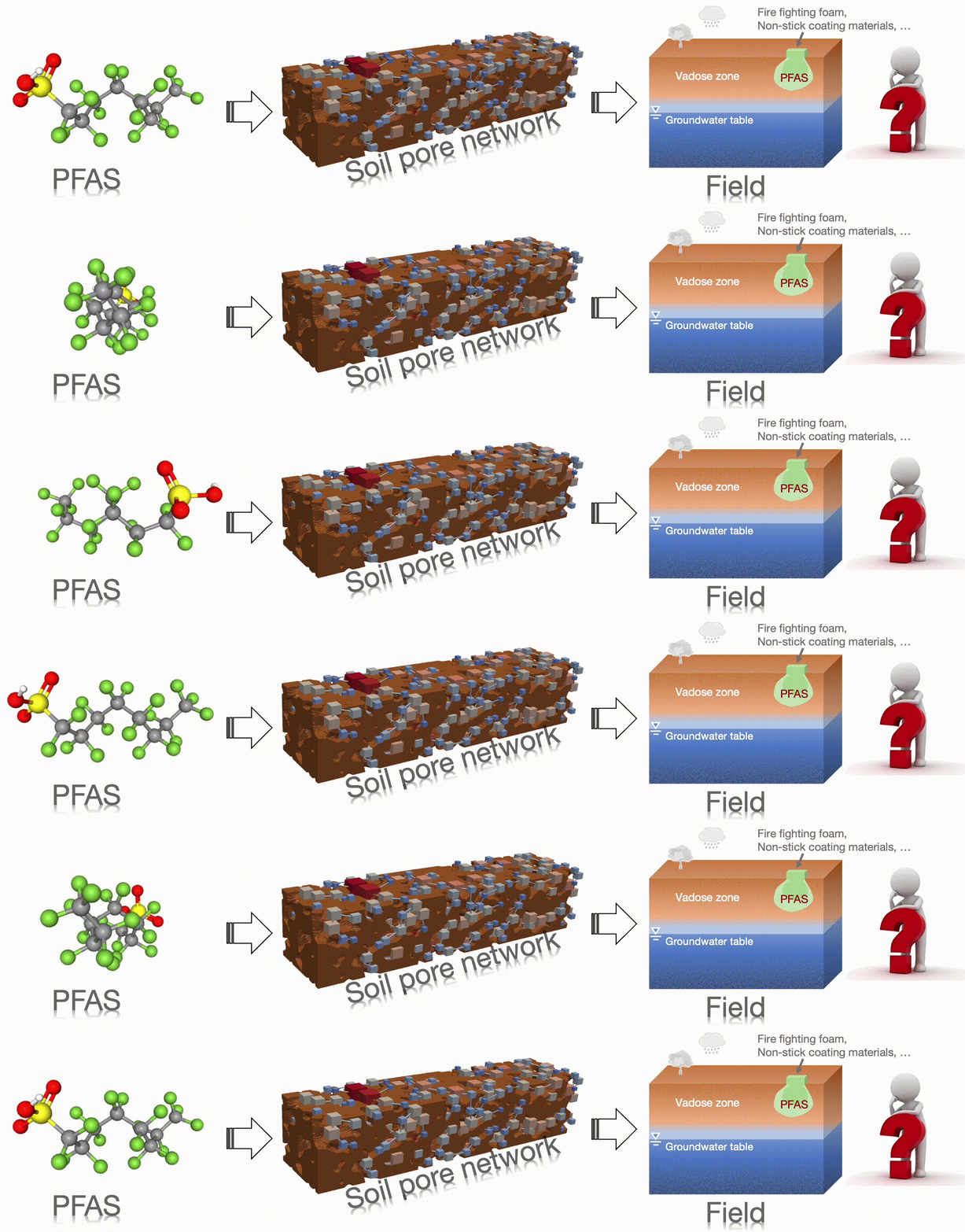
Water Evaporation and Heat Transfer in Soils
Evaporation of water from soils is a key process governing mass and energy fluxes at the land surface. It is controlled by atmospheric conditions such as temperature, humidity, and airflow, as well as coupled flow and transport processes within the soil.
This project develops pore-scale modeling frameworks to understand and quantify the processes that govern evaporation at the land-atmosphere interface, with emphasis on the impact of thin water films on mass and heat transfer.
Relevant material: Chen et al., AGU Fall Meeting (2022).
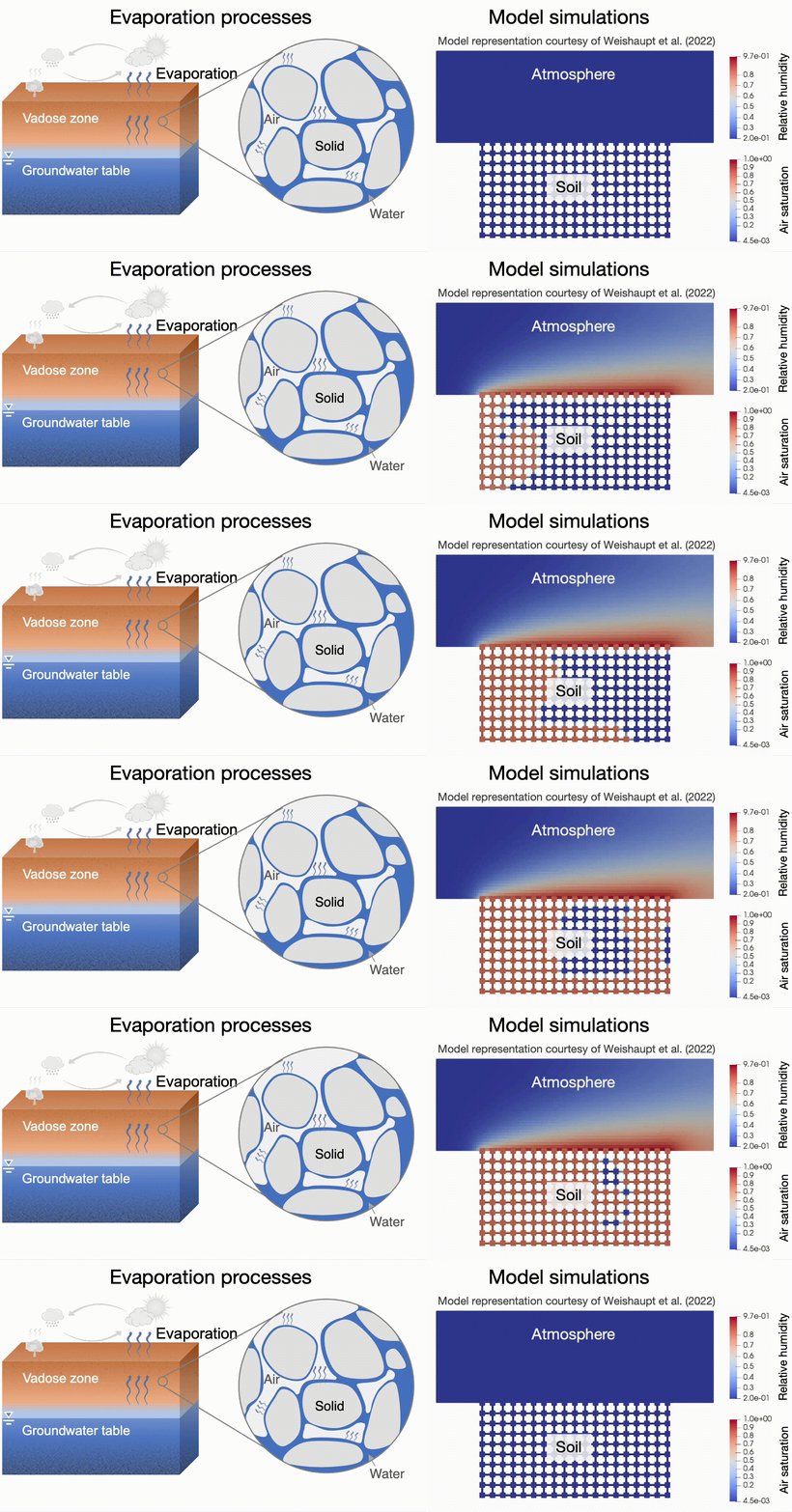
Compositional Flow and Thermodynamics in Nanoporous Media
Nanometer-scale pore spaces induce anomalous fluid-flow, transport, and thermodynamic phase-change behaviors. These effects are important for shale oil and gas production, where complex multiscale pore structures can make predictions from continuum models and molecular simulations difficult to reconcile.
This work develops pore-network modeling frameworks to examine how nanopore networks control phase behavior and compositional flow dynamics, with the goal of deriving constitutive relationships for reservoir-scale models.
Relevant materials: Chen et al., WRR (2020) [PDF]; Chen et al., CEJ (2021) [PDF]; Chen et al., URTec (2021) [PDF].